
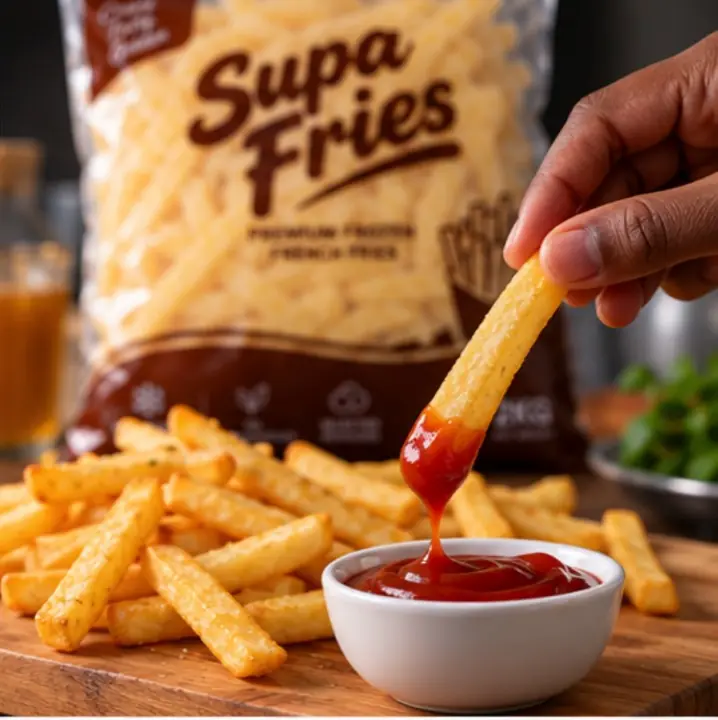
There is a moment every chips lover knows: you pick up a chip, and instead of a crunch, it bends. Soft, oily, disappointing. You did everything the same as last time, so what went wrong? Crispy chips are not luck. They come from a handful of small habits that make all the difference, and once you know them, you will never serve a limp chip again.
Whether you cook chips at home or serve hundreds a day, these nine tips fix the most common problems. They work for both frozen fries and fresh-cut chips.
1. Get the oil to 175°C before the chips go in
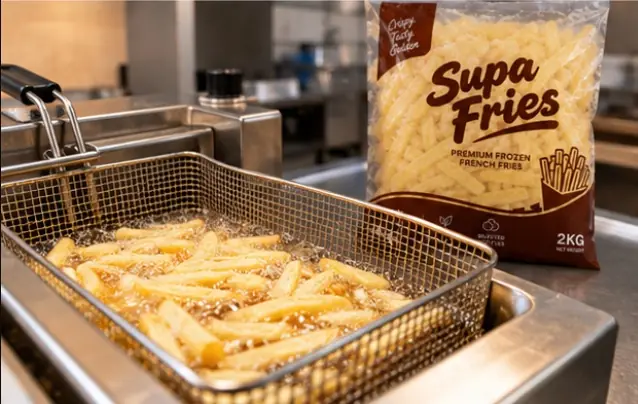
This is the biggest one. Cool oil soaks into the chips and makes them greasy; very hot oil browns the outside before the middle is soft. Use a fryer with a thermostat or a cheap kitchen thermometer, and wait for the oil to come back up to temperature between batches.
2. Fry in small batches
Fill the basket no more than half full. A big load drops the oil temperature sharply, and the chips boil in the oil instead of frying. Two quick batches give better chips than one crowded one.
3. Cook frozen fries straight from the freezer
Do not thaw frozen fries. As they thaw they release water and stick together, and they soak up oil in the fryer. Straight from the freezer into hot oil is the way to a crisp outside. Until then, keep them properly frozen.
Straight cut, 10-12 mm. Ready for the fryer in about 3 minutes, no peeling or cutting.
Order on WhatsApp4. Keep fresh-cut chips dry
If you cut your own chips, rinse off the starch, then dry them well with a clean towel. Water in hot oil spits, cools the oil and leaves chips soft. This is a step frozen fries skip entirely.
5. Use the right oil
Choose a neutral oil with a high smoke point, such as refined sunflower, vegetable, canola or palm oil. Keep enough oil in the fryer for the chips to move freely.
6. Change your oil on time
Old oil cooks darker, tastes bitter and makes chips limp. Strain out crumbs after each session, and change the oil when it turns dark, smells strong, foams or smokes at normal temperature.
7. Salt as soon as they come out
Shake off the oil, then salt immediately while the chips are still hot so it sticks. Salting before frying draws out water and damages the oil.
8. Never cover hot chips
A lid or a sealed tub traps steam and turns crisp chips soft in minutes. Serve straight away, or hold them in an open tray under a heat lamp for a short time only.
9. Start with an even cut
Chips of different sizes cook at different speeds, so some burn while others stay pale. An even 10-12 mm cut, like Supa Fries, gives a crunchy outside and a fluffy middle in about 3 minutes. Compare common fry cut sizes.
What is wrong with my chips?
| Problem | Likely cause | Fix |
|---|---|---|
| Soggy or limp | Oil too cool, basket too full | Heat to 175°C, fry smaller batches |
| Greasy | Oil too cool, chips thawed | Wait for the oil to heat, cook from frozen |
| Brown outside, hard inside | Oil too hot | Lower to about 175°C |
| Dark and bitter | Old oil, cooked too long | Change the oil, fry until golden only |
| Uneven colour | Uneven cut | Use evenly cut chips |
| Crisp, then soft minutes later | Covered while hot | Serve open or in a vented box |
For exact times in the air fryer and oven, see our guide on how to cook frozen fries. Wondering whether to cut your own? Read frozen fries vs fresh-cut chips.
In short
To make crispy chips, fry them in oil heated to about 175°C, in small batches, straight from frozen (or well dried if fresh), until golden, then salt them immediately and serve them uncovered. Most soggy chips come from oil that is too cool, a basket that is too full, or chips that are covered while hot.
Frequently asked questions
Why are my chips soggy?
The most common reasons are oil that is not hot enough, too many chips in the fryer at once, thawed or wet chips, and covering them after cooking. Fix the oil temperature and batch size first.
What is the best temperature for frying chips?
About 175°C for frozen fries. Below 160°C chips soak up oil and turn greasy; above 190°C the outside browns before the inside is cooked.
What is the best oil for frying chips?
A neutral oil that handles high heat, such as refined sunflower, vegetable, canola or palm oil. Avoid butter and unrefined oils, which burn at frying temperature.
How often should you change frying oil?
Change it when it turns dark, smells strong, foams, or starts smoking at normal frying temperature. Filtering out crumbs after each session helps it last longer.
How do you keep chips crispy for delivery?
Fry them until fully golden, salt them hot, and pack them in a vented box or paper bag rather than a sealed container, so steam can escape.
Start with better chips
Found this useful? Share it.