"Frozen fries are full of chemicals." "You have to thaw them first." "Air fryer chips are never crispy." You have probably heard at least one of these, maybe from a friend, maybe from a relative at a family lunch. Some sound believable. Most are simply wrong. Let us clear them up, one by one.
Myth 1: You should thaw frozen fries before cooking
Truth: Cook them straight from frozen. Thawed fries go soft, release water and soak up more oil, so they come out limp and greasy. Shake off any loose ice and put them straight into hot oil at 175°C, an air fryer at 200°C or an oven at 220°C. Full times are in our cooking guide.
Myth 2: Frozen fries are full of preservatives
Truth: Freezing itself preserves food, so well-made frozen fries do not need preservatives. Supa Fries contain none. Always read the label of any brand you buy. You can even make your own frozen fries at home with nothing but potatoes, water, salt and vinegar.
Myth 3: Frozen means less nutritious
Truth: Freezing keeps most of a potato's nutrients. The USDA notes that freezing does not destroy nutrients. The bigger factor is how you cook them: deep frying adds fat, while air frying or oven baking adds very little. Read are frozen fries healthy?
Myth 4: More oil makes crispier fries
Truth: Temperature makes fries crisp, not the amount of oil. You need enough oil to cover the fries, at the right heat, without crowding the basket. Cool or crowded oil makes greasy fries. See how to make fries less oily.
Myth 5: Air fryer fries can never be crispy
Truth: They can, if you preheat, cook in a single layer and shake the basket. Frozen fries are well suited to air fryers because their surface is already dry. Compare the two in air fryer vs deep fryer.
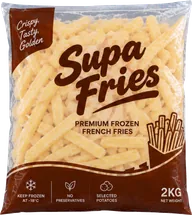
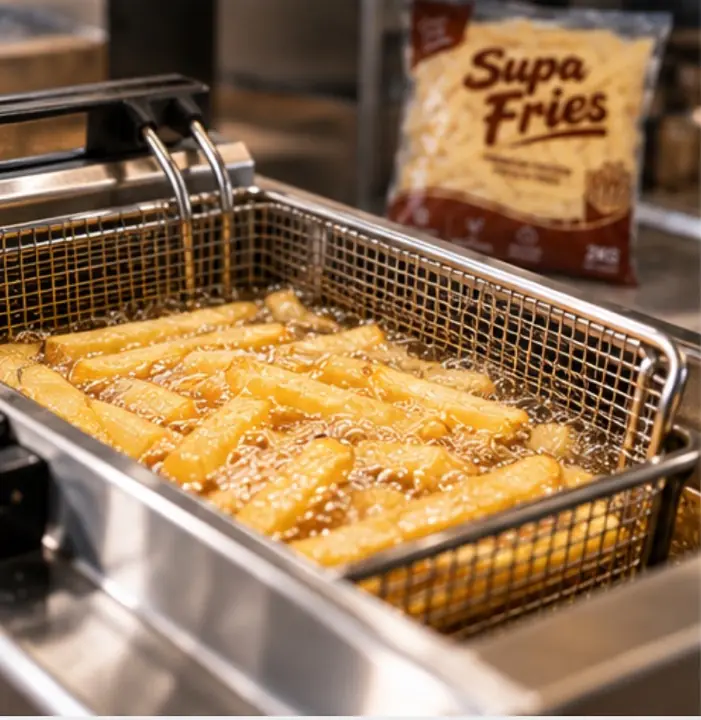
Straight from the freezer into the fryer. Crisp, golden fries in about 3 minutes.
Order on WhatsAppMyth 6: Frozen fries last forever
Truth: Frozen food stays safe while it is kept frozen, but quality slowly drops. Supa Fries keep for up to 12 months at −18°C. Opened bags are best used within 1 to 2 months. Fries that thaw and refreeze become icy and soft. See how to store frozen fries.
Myth 7: All frozen fries are imported
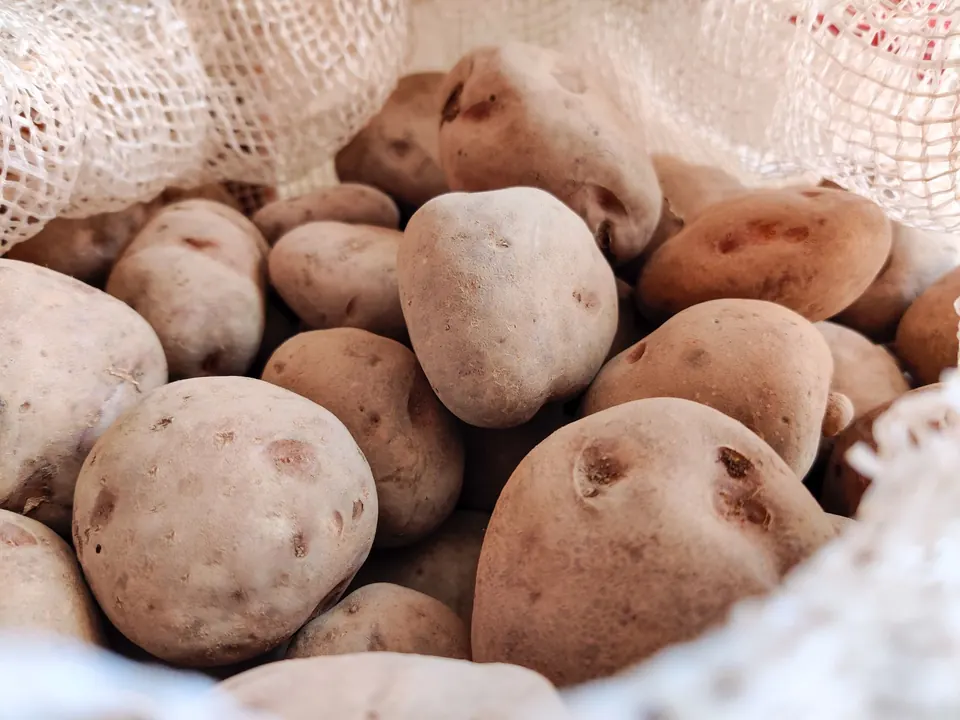
Truth: Not any more. Supa Fries are cut from potatoes grown in Tanzania's Southern Highlands and frozen in Dar es Salaam. Locally made fries mean a shorter supply chain and support for Tanzanian farmers. Learn more in Irish potatoes in Tanzania.
Which frozen fries facts matter most?
| Myth | Fact |
|---|---|
| Thaw before cooking | Cook from frozen |
| Full of preservatives | Freezing preserves them; Supa Fries have none |
| Less nutritious | Freezing keeps most nutrients |
| More oil = crispier | Right temperature = crispier |
| Air fryer fries are soggy | Preheat, single layer, shake |
| Last forever | Up to 12 months at −18°C |
| All imported | Supa Fries are grown and made in Tanzania |
Bonus myth: Frozen fries are only for fast food chains
Truth: Frozen fries are used everywhere, from family kitchens and school canteens to hotels, chips spots and fine restaurants. Many professional kitchens use them because they give the same result every service and free up staff time. At home, they mean chips on a weeknight without peeling. See why restaurants choose Supa Fries.
Bonus myth: Salting before frying makes fries tastier
Truth: Salt added before frying draws water to the surface, makes the oil spit, and falls into the fryer where it speeds up oil breakdown. Season straight after frying, while the fries are hot and slightly glossy, so the salt sticks. Our fries seasoning ideas explain the timing.
Bonus myth: Darker fries are crispier fries
Truth: Crispness comes from a dry, well-sealed surface, not from colour. Fries cooked to dark brown are often over-done: bitter, hard and higher in acrylamide. Golden yellow is the target. Read acrylamide in fries to see why food safety agencies say "go for gold".
Why do these myths spread?
Most frozen fries myths come from bad experiences that had nothing to do with freezing. A soggy plate of chips from a fryer with old, cool oil gets blamed on "frozen fries". A pack that thawed in a hot car and was refrozen turns icy, and people decide frozen food is poor quality. Imported fries that sat in long supply chains give the whole category a bad name. The fix is simple: good fries, stored properly and cooked correctly.
How do you get perfect frozen fries every time?
- Store at −18°C and keep packs sealed. See how to store frozen fries.
- Cook from frozen. Shake off any loose ice.
- Use the right heat: 175°C deep fryer, 200°C air fryer, 220°C oven.
- Small batches. Basket no more than half full.
- Stop at golden.
- Drain, then salt.
- Serve immediately.
So, are frozen fries as good as fresh?
When they are well made and well cooked, yes, and often more consistent. Fresh-cut chips vary with every sack of potatoes, every cook and every rushed morning. Frozen fries are cut to one size from selected potatoes, so they cook evenly and come out the same golden colour. Fresh chips can be wonderful when done well, but they take time, skill and waste. Our full comparison, frozen fries vs fresh-cut chips, works through taste, time, cost and waste side by side. And if you are curious, you can even try making frozen fries at home to see the difference for yourself.
What should you check on a frozen fries label?
- Ingredients: potatoes should be first. Fewer additives is better.
- Preservatives: not needed for frozen fries.
- Cut size: tells you the texture and cooking time.
- Cooking instructions: for each method.
- Storage temperature and date.
- Where it was made: local products have shorter supply chains. Learn about frozen fries made in Tanzania.
The US FDA's guide to food labels is a useful general explainer of what labels tell you.
Have a frozen fries question we did not answer?
Send it to us on WhatsApp or Instagram. We read every message, and the most common questions become new guides on this blog. In the meantime, our cooking guide and storage guide answer most everyday questions.
Bonus myth: Frozen fries are bad for children
Truth: Fries are a starchy food, like rice or ugali, and they can be part of a child's balanced diet. What matters is how often, how much and how they are cooked. A child's portion of about 80 to 120 g, air-fried or oven-baked, served with an egg, chicken or beans and some fruit or vegetables, is a perfectly reasonable meal. Problems come from very large portions, very oily chips and fries eaten every day with nothing else. See our weekly family meal plan for balanced ideas.
Bonus myth: You can cook frozen fries in the microwave
Truth: You can heat them, but they will not be crisp. A microwave heats the water inside food, which turns to steam and softens the outside. Frozen fries need dry, high heat to crisp: hot oil, an air fryer or a hot oven. If a microwave is all you have, finish the fries in a hot frying pan for a few minutes to bring some crunch back. More in how to reheat fries.
Bonus myth: A short power cut ruins frozen fries
Truth: Not if the freezer stays closed. A full freezer keeps food frozen for about 48 hours with the door shut. Check the fries when the power returns: if they are still frozen hard, they are fine.
In short
The biggest frozen fries myths are that you must thaw them first (you should not), that they are full of preservatives (freezing does the preserving, and Supa Fries contain none), and that they are much less nutritious than fresh potatoes (freezing keeps most nutrients). Most problems people blame on frozen fries come from how they are cooked or stored, not from freezing itself.
- Cook frozen fries straight from frozen; never thaw first.
- Freezing preserves fries, so preservatives are not needed. Supa Fries contain none.
- Freezing keeps most nutrients; cooking method matters more.
- Temperature, not more oil, makes fries crisp.
- Golden, not dark brown, is the target.
- Good frozen fries keep for up to 12 months at −18°C.
Frequently asked questions
Should you thaw frozen fries before frying?
No. Cook them straight from frozen. Thawed fries absorb more oil and come out soft.
Do frozen fries have preservatives?
Well-made frozen fries do not need them, because freezing preserves the potatoes. Supa Fries contain no preservatives.
Are frozen fries worse than fresh?
Not necessarily. Frozen fries are cut evenly from selected potatoes and give a consistent result. Nutrition depends mostly on how you cook them.
Why are my frozen fries soggy?
Usually because the oil was not hot enough, the fryer or air fryer basket was overcrowded, or the fries were thawed before cooking.
Are frozen fries as good as fresh-cut chips?
When they are well made and cooked correctly, yes, and they are usually more consistent, because every fry is cut to the same size.
Should I salt fries before cooking?
No. Salt after cooking, while the fries are hot. Salt before frying makes the oil spit and break down faster.
Are darker fries crispier?
No. Crispness comes from a dry, sealed surface. Dark brown fries are usually overcooked and bitter. Aim for golden yellow.
Can you cook frozen fries in a microwave?
You can heat them, but they will be soft. For crisp fries use a deep fryer, air fryer or hot oven.
Get Supa Fries delivered
Found this useful? Share it.