
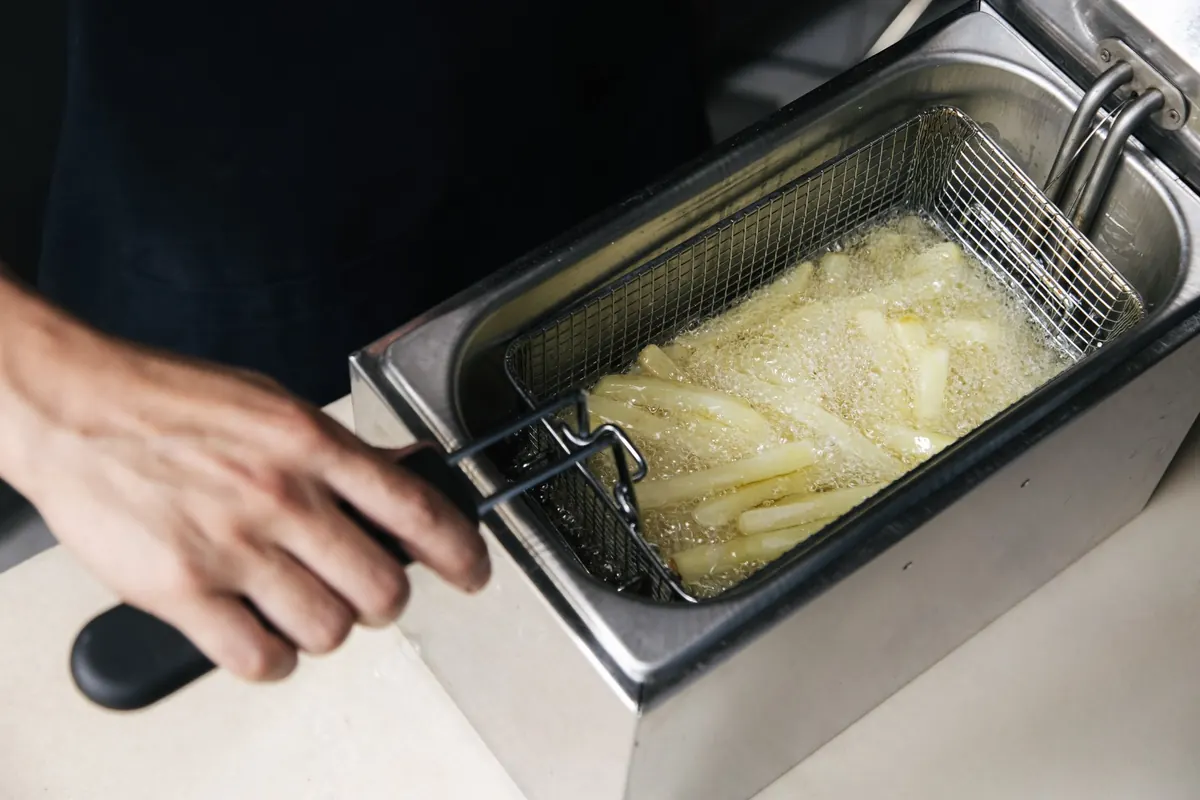
The fryer is the heart of a chips business. When it works well, nobody notices. When it fails on a busy Friday, everyone notices. Buying one is a big decision, and the cheapest option on the shop floor can end up being the most expensive mistake you make. Here is what to look for before you pay.
Should you buy a gas or electric deep fryer?
| Gas (LPG) | Electric | |
|---|---|---|
| Power cuts | Keeps working | Stops |
| Heat-up and recovery | Usually fast | Good on quality models |
| Installation | Needs gas line or cylinder and ventilation | Needs a suitable socket and wiring |
| Temperature control | Good with a thermostat | Very precise |
| Cleaning | Fixed tank, drain valve | Often removable elements and tanks |
| Best for | Busy chips spots, unstable power | Restaurants, hotels, cafes |
What should you check before buying a deep fryer?
1. A thermostat you can trust
The single most important feature. Frozen fries need 175°C. Without a thermostat, staff guess, and chips come out pale and greasy one hour, dark the next. Test it with a cooking thermometer when it arrives.
2. Oil capacity for your busiest hour
Small batches in plenty of oil fry best. As a guide, a single 8 litre tank comfortably handles small baskets of fries one after another; a busy lunch rush may need a double-tank fryer or two units. See our portion guide to estimate how many kilos you serve in an hour.
3. Fast recovery time
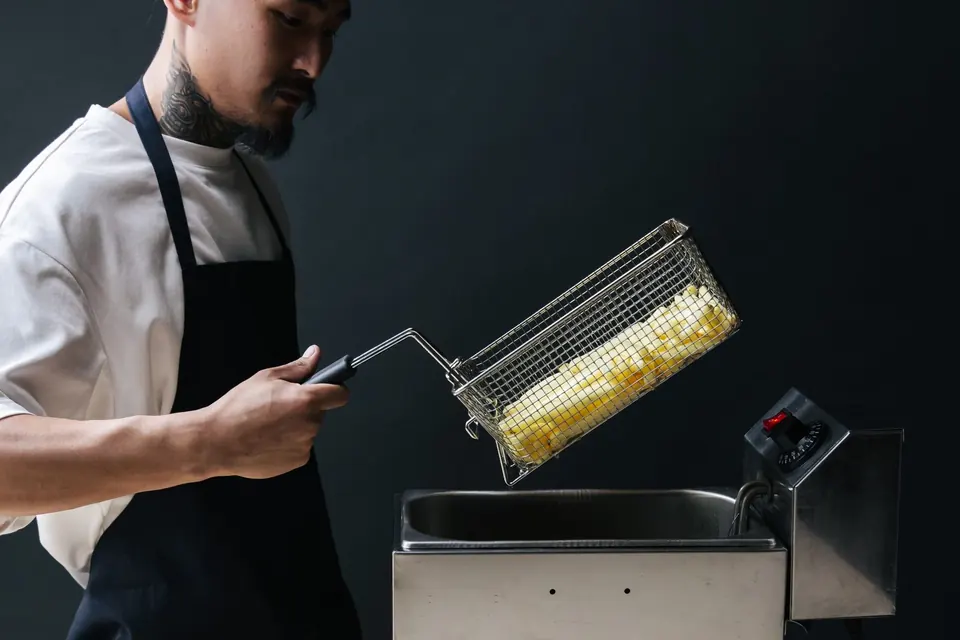
Frozen fries drop the oil temperature when they go in. A good fryer heats back to 175°C quickly. Slow recovery means soggy fries in a rush. Ask the seller about the power rating (kW) and recovery.
4. A cold zone
A cool area below the heating element where crumbs sink and stop burning. It keeps oil cleaner for longer. Read how often to change frying oil.
5. A drain valve and easy cleaning
A front drain valve makes daily filtering quick and safe. Removable baskets and smooth stainless steel make cleaning easier.
6. Safety features
Look for a high-limit cut-off (switches off if oil overheats), sturdy legs or a stable base, and cool-touch handles. Keep a fire blanket or a suitable extinguisher next to the fryer. Never use water on an oil fire.
7. Local spare parts and service
A fryer that cannot be repaired locally can close your business for weeks. Buy from a supplier who stocks thermostats, elements and baskets in Tanzania.

Bulk orders from 15 kg with weekly or biweekly delivery in Dar es Salaam and invoicing on request.
Ask for wholesale pricesWhat size deep fryer do I need?
- Home or very small stand: 3 to 6 litres
- Small chips spot or cafe: 8 to 12 litres, single or double tank
- Busy restaurant or fast food: two or more tanks of 12 litres or larger
If you fry chicken and fish too, separate tanks keep the chips tasting clean.
Can a business use an air fryer instead?
For small volumes, yes, but most air fryers are too small and slow for a lunch rush. Read air fryer vs deep fryer for the full comparison, and how to start a chips business for the full equipment list. You can learn more about how deep fryers work on Wikipedia.
What types of commercial fryers are there?
| Type | What it is | Good for |
|---|---|---|
| Countertop electric | Small unit that sits on a bench, often 4 to 10 litres | Cafes, small chips spots, starting out |
| Double-tank countertop | Two small tanks side by side | Keeping chips and chicken separate |
| Floor-standing (gas or electric) | Larger tank on its own stand | Busy restaurants and fast food |
| Simple gas fryer pot | Pot or tank over a gas burner, often without a thermostat | Street vendors; hard to control temperature |
| Pressure fryer | Sealed fryer that cooks under pressure | Large-scale fried chicken |
Where should the fryer go in your kitchen?
- On a stable, level, heat-proof surface, never on a wobbly table.
- Away from water: keep sinks and drinks at a safe distance. Water and hot oil are a dangerous mix.
- Under good ventilation or an extractor hood, especially for gas fryers.
- Out of customer reach, behind the counter.
- Close to the freezer and serving area, so cooks are not carrying hot food far.
- With space around it for cleaning and air flow.
What do you need to check before buying an electric fryer?
Commercial electric fryers draw a lot of power. Check the rating (in kilowatts) against your wiring and sockets, and ask an electrician if you are unsure. Bigger fryers may need a dedicated circuit. In areas with frequent power cuts, think about whether you can keep frying when the power goes. Many chips spots in Tanzania keep a gas option for this reason, or run a generator. A voltage protector also protects the electronics from surges when power returns.
How do you look after a commercial fryer?
- Daily: filter oil, wipe the outside, empty and wash the baskets.
- Weekly: drain, clean the tank with hot water and detergent, rinse thoroughly, dry fully.
- Monthly: check the thermostat with a thermometer, inspect cables, gas hoses and connections.
- As needed: replace worn baskets, seals and elements through a local service agent.
Never switch on an electric fryer with no oil in it; the element can burn out in seconds. More on oil care in how often to change frying oil.
Why do frozen fries suit commercial fryers?
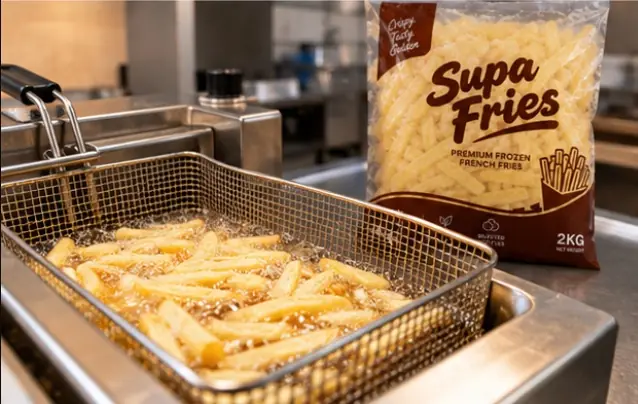
Commercial fryers are built for exactly this job. Frozen fries cut to an even size cook in a predictable time (about 3 minutes at 175°C), so staff can use a timer and every basket comes out the same. There is no excess starch or loose potato pieces from hand cutting, which helps oil stay cleaner. The one thing to watch is ice: shake the basket over a tray before lowering it into the oil, and keep packs sealed in the freezer so ice does not build up. Read why restaurants choose Supa Fries.
What questions should you ask the seller?
- What is the oil capacity and the power or gas rating?
- How quickly does it heat up and recover after loading?
- Does it have a thermostat and a high-limit safety cut-off?
- Is there a cold zone and a drain valve?
- What warranty is offered, and who services it locally?
- Are spare baskets, thermostats and elements available in Tanzania?
For your full startup list, see how to start a chips business in Tanzania, and for space planning, the chest freezer guide.
How do you choose a fryer on a tight budget?
Put your money into the thermostat and build quality, not extra features. A simple, sturdy single-tank fryer with a reliable thermostat will serve a small chips spot well. Avoid very cheap fryers without temperature control; they cost more over time in wasted oil and bad chips. If you need more capacity later, add a second fryer rather than buying one oversized unit now.
A good fryer is one of the best investments a chips business can make. Choose for temperature control, capacity and local service, look after it every day, and it will repay you with consistent, golden chips through thousands of busy lunch and dinner rushes. Pair it with even-cut frozen fries for the most predictable results.
In short
For a restaurant or chips business, choose a deep fryer with an accurate thermostat, enough oil capacity for your busiest hour, fast temperature recovery, a cold zone and a drain valve. Gas fryers suit areas with frequent power cuts and heavy volume; electric fryers are easier to install, control and clean. A typical small chips spot starts with one 8 to 12 litre fryer, or two smaller ones so chips and chicken stay separate.
- A reliable thermostat is the most important feature.
- Gas suits areas with power cuts; electric is precise and easy to install.
- Size the fryer for your busiest hour; consider double tanks.
- Look for fast recovery, a cold zone, a drain valve and safety cut-offs.
- Buy where spare parts and service are available locally.
Frequently asked questions
Is a gas or electric fryer better for chips?
Both work well with a good thermostat. Gas keeps working through power cuts and recovers heat quickly; electric is easier to install and very precise.
What temperature should a commercial fryer be for frozen fries?
175°C. Fry for about 3 minutes until golden.
How big a fryer do I need for a chips spot?
Most small chips spots start with an 8 to 12 litre fryer, or a double-tank model so chips and chicken are fried separately.
How long does a commercial deep fryer last?
A good stainless steel fryer can last many years if it is cleaned daily, never run dry, and serviced when the thermostat or element fails.
Can I use a regular pot instead of a deep fryer?
You can, but without a thermostat it is hard to keep oil at 175°C, and open pots are a bigger fire risk. A fryer with a thermostat gives more consistent chips.
Why should chips and chicken be fried separately?
Chicken coatings and juices break the oil down faster and flavour it, so chips fried in the same oil taste of chicken and the oil needs changing sooner.
How often should a fryer be serviced?
Check the thermostat monthly and have a technician look at gas or electrical parts whenever something seems wrong, or at least once a year.
Get Supa Fries delivered
Found this useful? Share it.