
Fatuma's chicken and chips plate was the most popular dish in her restaurant. It was also, she discovered one evening with a calculator, almost the least profitable. Chicken prices had gone up twice that year, the portion of chips had slowly grown, and her price had not moved since opening. She was working hardest on the dish that paid her least.
Menu pricing is how you avoid that trap. In short: work out the exact cost of each dish, aim for a food cost of roughly 28 to 35 percent of the selling price, check the price against what your customers expect, then look at which dishes sell well and earn well, and design your menu to push those. Here is the method step by step, with Tanzanian examples.
What is food cost and why does it matter?
Food cost is the cost of the ingredients in a dish, shown as a percentage of its selling price. If a plate costs TZS 3,500 in ingredients and sells for TZS 12,000, its food cost is 29 percent. The rest of the price has to pay for staff, rent, gas, power, packaging, taxes and, finally, your profit.
Many restaurants aim for 28 to 35 percent overall. Some dishes will be higher (meat, seafood) and some lower (chips, rice, drinks, juice). What matters is the average across everything you sell.
Step 1: How do you cost a dish?
Write a recipe card for every dish with the exact portion of each ingredient. Weigh it, do not guess. Then multiply each amount by what you pay for it.
| Ingredient (chicken and chips) | Portion | Example cost (TZS) |
|---|---|---|
| Chicken, quarter | 1 piece | 2,500 |
| Chips | 250 g | 900 |
| Cooking oil (share) | Per plate | 250 |
| Kachumbari | 1 small bowl | 200 |
| Sauce, salt, spices | Per plate | 150 |
| Total food cost | 4,000 |
These numbers are examples. Use your own supplier prices. Our chips cost per plate guide shows how to calculate the chips line accurately, including oil and waste.
Step 2: How do you turn cost into a price?
Divide the food cost by your target food cost percentage. For a TZS 4,000 plate and a 33 percent target: 4,000 / 0.33 = about TZS 12,100. Round to a clean number: TZS 12,000.
That is your starting price, not your final one. Now compare it with what nearby restaurants charge and what your customers expect to pay. If your price is much higher, look at the portion size or the ingredients before you raise the price. If it is lower, you may have room to charge a little more.
Step 3: Which dishes earn the most?
Food cost percentage is not the whole story. A dish with 40 percent food cost that sells for TZS 25,000 can leave more shillings per plate than a 25 percent dish selling for TZS 5,000. Look at two numbers for every dish: how many you sell, and how much money each one leaves after ingredients (selling price minus food cost).
Put every dish into one of four groups:
- Stars: sell a lot and earn well. Keep them visible and never let quality slip.
- Workhorses: sell a lot but earn little. Adjust the portion, ingredients or price carefully.
- Puzzles: earn well but do not sell. Move them to a better spot on the menu or ask staff to recommend them.
- Dogs: sell little and earn little. Remove them or replace them.
Do this every three months using your sales records.
Why are sides and drinks so important?
Sides like chips, rice and salads, and drinks like sodas and fresh juice, often have lower food cost than main dishes. When a customer adds chips or a juice, your average profit per table goes up. Train staff to suggest them. Our post on how restaurants can sell more chips has simple upselling lines.
Frozen fries have a predictable cost per kilo and very little waste, which makes your chips line easy to price.
Ask for wholesale prices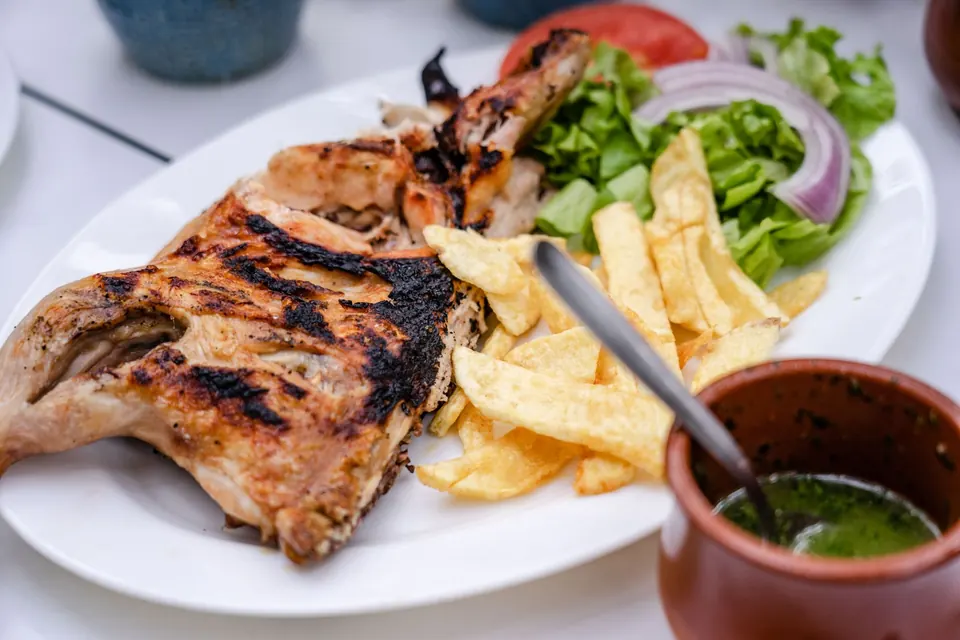
How should you design the menu?
- Keep it short. 12 to 20 main dishes is easier to read and easier to cook well.
- Put stars where eyes go first. The top of each section and the top right of a two-page menu get the most attention.
- Drop the currency sign. Writing "12,000" instead of "TZS 12,000" feels less like a bill.
- Do not line prices up in a column. It makes people shop by price. Put the price after the description.
- Describe the dish in a few honest words. "Charcoal-grilled quarter chicken, chips and kachumbari" sells better than "Chicken chips".
- Use photos carefully. A few good photos of your stars help; a photo of every dish makes the menu look cheap.
- Offer combos. "Chips kuku plus soda" at a small saving raises the average bill.
When and how should you raise prices?
Review your food costs every three months, and immediately when a key ingredient jumps. The National Bureau of Statistics publishes monthly inflation figures, including food prices, which help you see whether a price rise is temporary or part of a wider trend. When you must raise prices:
- Raise a little, more often, rather than a lot at once.
- Change prices on slower dishes first and protect your most popular price points.
- Improve something at the same time: a better sauce, a fresh garnish, a new presentation.
- Consider adjusting portions slightly before raising the price of a favourite.
- Print new menus. Crossed-out prices look bad.
How does waste affect pricing?
Every bit of food thrown away is money that has to be covered by the dishes you sell. Over-portioning is waste too: an extra 50 g of chips on every plate adds up to kilos every week. Measure portions with scoops and scales, and read our guide to reducing food waste in restaurants.
What does a full example look like?
| Dish | Food cost | Price | Food cost % | Left per plate |
|---|---|---|---|---|
| Chipsi mayai | 1,600 | 5,000 | 32% | 3,400 |
| Chicken and chips | 4,000 | 12,000 | 33% | 8,000 |
| Whole grilled fish | 9,000 | 22,000 | 41% | 13,000 |
| Fresh passion juice | 700 | 3,500 | 20% | 2,800 |
All figures are TZS and are examples only. The fish has the highest food cost percentage but leaves the most money per plate, so it is still a good dish to promote.
When you have your prices, put them into a simple restaurant business plan and check that your sales forecast covers your monthly costs.
Do prices ending in 500 or 900 sell better?
In Tanzania, most restaurants use round prices like 5,000 or 12,000, and customers like that because it makes paying and giving change easy. Prices such as 11,900 can look like a trick in a sit-down restaurant and slow down cash payments. A better approach is to group dishes into clear price bands, so customers can see "the 5,000 dishes" and "the 12,000 dishes" at a glance, and to make sure each band has one dish that feels like great value.
Finally, write your prices down with the date you set them. When you review in three months, you will see exactly which costs moved and by how much.
In short
To price a restaurant menu in Tanzania, cost every dish from a weighed recipe, divide the cost by a target food cost of around 28 to 35 percent, then check the price against your customers' expectations and nearby restaurants. Track how many of each dish you sell and how much each earns, promote the winners, fix or remove the rest, and review prices every three months as costs change.
Frequently asked questions
What is a good food cost percentage for a restaurant?
Many restaurants aim for around 28 to 35 percent on average across the menu. Individual dishes can be higher or lower.
How do I calculate the price of a dish?
Add up the cost of every ingredient in the portion, then divide by your target food cost percentage. For example, TZS 4,000 divided by 0.33 is about TZS 12,000.
How often should restaurants change menu prices?
Review costs every three months and adjust when key ingredient prices change. Small, regular changes are easier for customers to accept.
What dishes make restaurants the most money?
Dishes that sell well and leave a good amount after ingredients. Sides and drinks often have lower food cost and add profit to every table.
Should I put photos on my menu?
A few good photos of your best dishes can help, but too many photos can make a menu look cluttered.
Put better chips on your menu
Found this useful? Share it.