
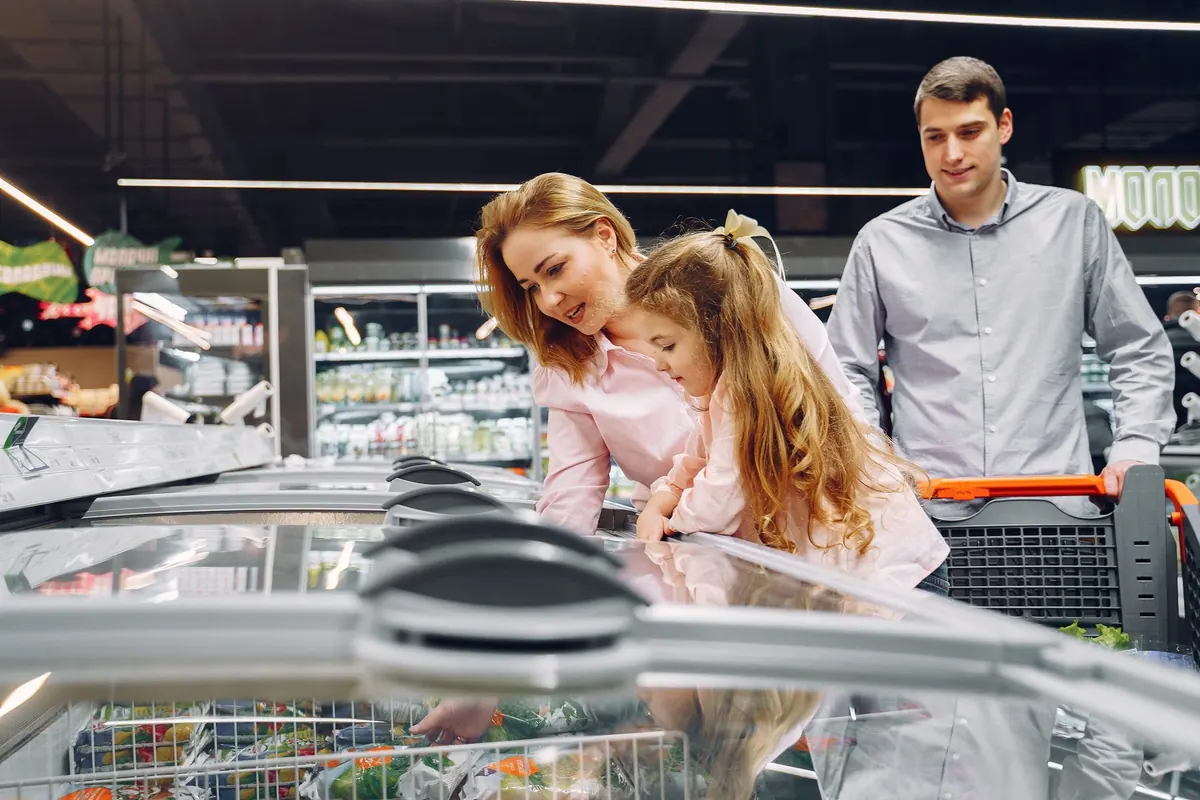
For a food business, the freezer is a silent partner. It works day and night, nobody thanks it, and you only think about it when the power goes off or something starts to smell. Choosing and running the right freezer protects your stock, your money and your customers.
Why choose a chest freezer over an upright?
- Cold air stays in. Cold air sinks, so opening a chest freezer lets out less cold than opening an upright door.
- Longer hold during power cuts.
- More storage for the price, and usually lower running cost.
The downside is that items at the bottom are harder to reach, so use baskets and a simple layout.
What size chest freezer do I need?
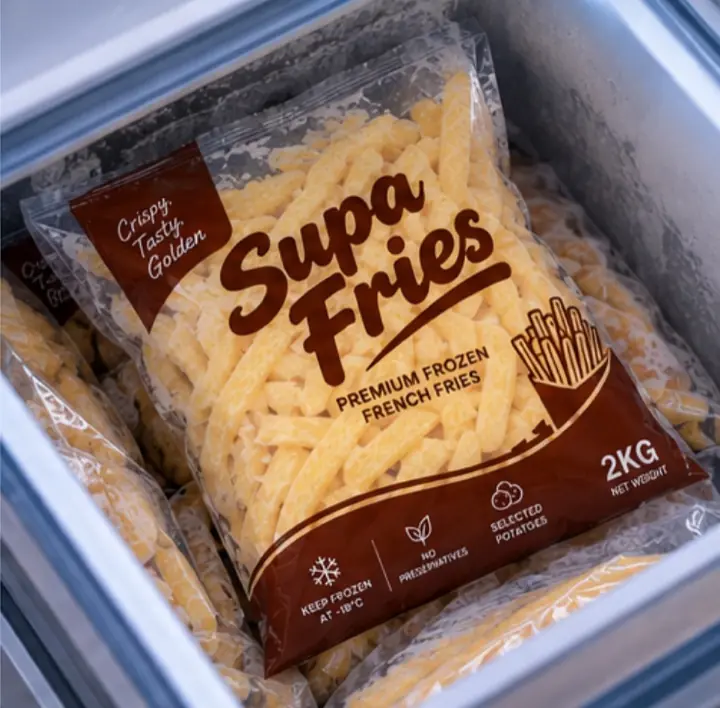
As a rough guide, a 2 kg bag of frozen fries takes about 4 to 5 litres of freezer space. Leave about 20 percent free so air can move.
| Freezer | Fries only (approx.) | Good for |
|---|---|---|
| 100 to 150 L | About 15 to 25 bags (30 to 50 kg) | Large family, small stand |
| 200 to 300 L | About 35 to 50 bags (70 to 100 kg) | Chips spot, cafe |
| 400 L or more | About 70+ bags (140+ kg) | Restaurant, shop, mixed stock |
Measure your own packs, because chicken, sausages and other stock share the space. Weekly or biweekly deliveries mean you can use a smaller freezer: see how wholesale delivery works.
What is a freezer climate class, and why does it matter?
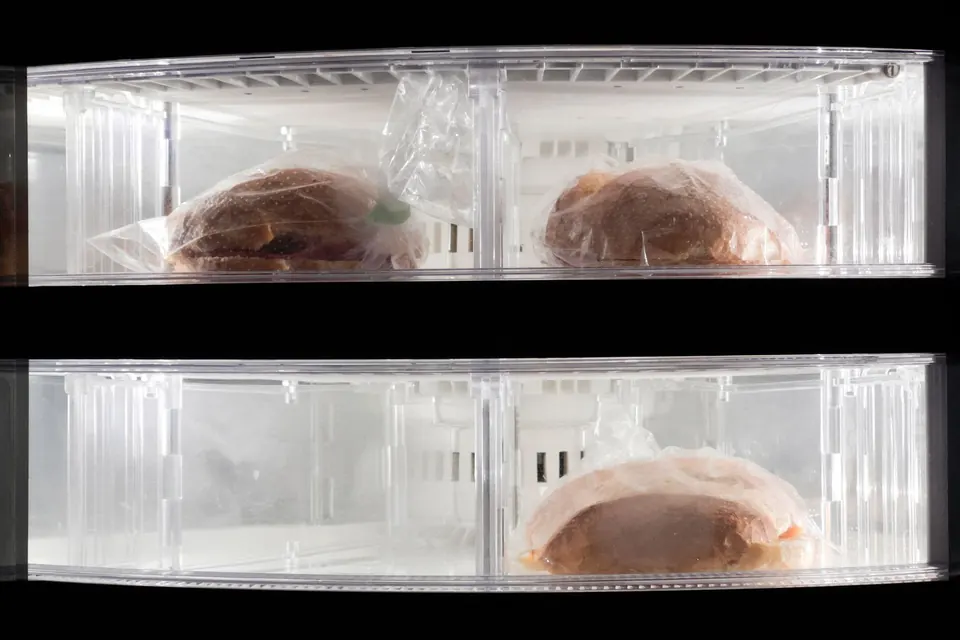
Freezers are rated for the room temperature they can handle. The T (tropical) class is designed for rooms up to about 43°C, while SN and N classes are designed for cooler rooms. In a hot kitchen or shop in Dar es Salaam, a T-class freezer keeps food frozen with less strain. Look for "T" or "SN-T" on the rating label. More on climate classes.
8 tips for running a chest freezer
- Use a voltage protector (stabiliser or guard) to protect the compressor from power surges when electricity returns.
- Keep a thermometer inside and check it is at −18°C every morning.
- Leave space around it: about 10 cm from walls, away from fryers, ovens and direct sun.
- Keep it full. Frozen items keep each other cold. Fill gaps with bottles of frozen water.
- First in, first out. New stock at the bottom or back, older stock on top.
- Use baskets or labels so you find things fast and keep the lid open for less time.
- Defrost when ice builds up to about 5 mm. Thick ice wastes power and space.
- Check the lid seal. If a sheet of paper slides out easily when the lid is closed, the seal needs attention.
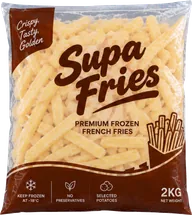
2 kg bags stack neatly and keep for up to 12 months at −18°C.
Order on WhatsAppWhat should you do in a power cut?
Keep the lid shut. According to the USDA, a full freezer holds its temperature for about 48 hours and a half-full one for about 24 hours if the door stays closed. If power cuts are frequent, consider a generator or solar backup for the freezer. When the power returns, check food: fries still frozen hard are fine; fully thawed fries should be cooked that day and not refrozen. More in how to store frozen fries.
How often should you clean a chest freezer?
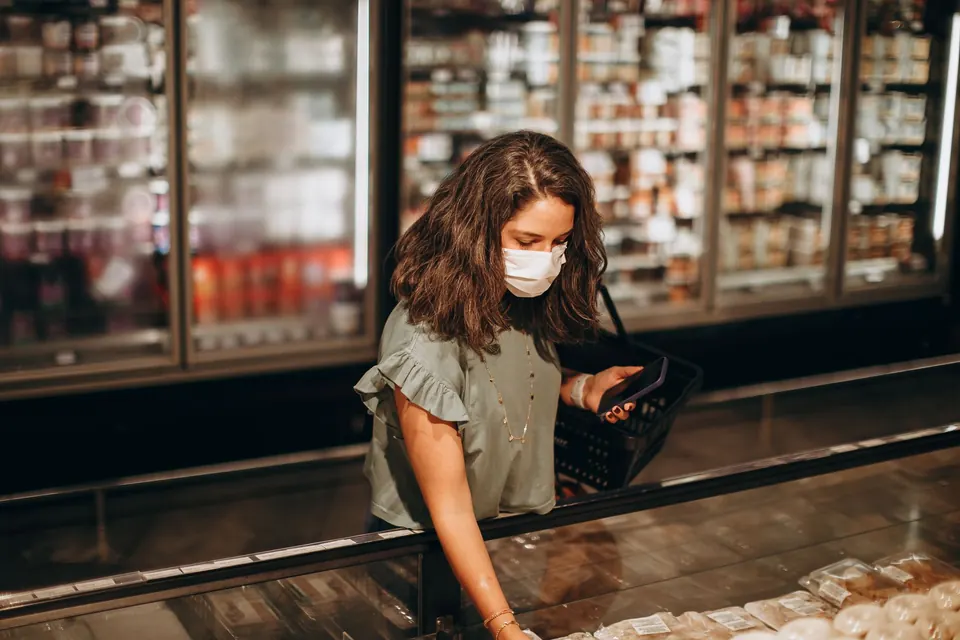
Wipe spills straight away and do a full clean when you defrost, every few months. Move stock to cool boxes, switch off, let the ice melt, clean with warm water and a little baking soda, dry fully, and switch on for an hour before reloading. See also our food safety rules for chips vendors.
How should you organise a chest freezer?
- Use wire baskets or plastic crates to divide stock by type: fries, chicken, sausages.
- Raw meat at the bottom, in sealed containers, so drips cannot reach other food.
- Frozen fries and ready-to-cook items on top, where you reach them most.
- Label everything with the date it went in.
- Keep a simple stock list taped to the lid: what is inside and how much.
Knowing exactly where things are means the lid stays open for seconds, not minutes, which saves power and keeps food colder.
How much electricity does a chest freezer use?
Energy use depends on the size, age and quality of the freezer, the room temperature and how often the lid is opened. Check the energy label or the manufacturer's rating, which is often given in kilowatt-hours per year. Newer models are usually much more efficient than old ones. To keep power use down, keep the freezer full, away from heat, with a good seal, and defrost before the ice gets thick.
What should you do when you get a new freezer?
- Let it stand upright for a few hours after transport before switching on (check the manual), so the oil in the compressor settles.
- Clean the inside with warm water and a little baking soda.
- Switch on empty and let it reach −18°C, which can take several hours.
- Load gradually, starting with already-frozen items.
- Check the temperature the next morning.
What are the warning signs of a failing freezer?
| Sign | What it may mean |
|---|---|
| Temperature rising above −18°C | Overloaded, poor seal, or failing compressor |
| Heavy ice build-up | Lid seal not closing properly |
| Running non-stop | Too hot a room, dirty coils, or low gas |
| Unusual noises | Compressor or fan problem |
| Water under the freezer | Drain blocked or defrost problem |
| Soft food or ice crystals in packs | Temperature has been rising |
Call a technician early. A repair costs far less than a freezer full of spoiled stock.
How do you protect stock during long power cuts?
- Keep the lid shut. This is the most important step.
- Keep the freezer full, using frozen water bottles in empty space.
- Cover the freezer with a blanket for extra insulation (keep vents clear once power returns).
- Plan a backup: a generator or solar system for long outages.
- Check food when power returns: still frozen hard is fine; thawed food should be cooked that day or thrown away, never refrozen.
How much stock should you keep?
Enough to last until your next delivery, plus a small buffer for busy days. If you get weekly deliveries, hold about a week and a half of stock. If deliveries are every two weeks, hold a little more than two weeks. Track how many kilos of fries you use each week; after a month, the right stock level becomes clear. Read how much fries per person and how to order Supa Fries. For shops, see how to sell frozen fries in your shop.
Is a second-hand freezer worth buying?
It can save money, but check carefully. Ask how old it is, plug it in and confirm it reaches −18°C within several hours, check the lid seal and hinges, look for rust inside and underneath, and listen for loud or irregular compressor noise. Older freezers often use much more electricity, which can cancel out the saving over a year or two. Buy from a seller who lets you test it, and budget for a voltage protector either way.
A well-chosen, well-kept freezer protects your stock, your money and your customers. Buy the right size, protect it from power problems, check it daily and keep it organised, and it will quietly support your business for many years.
In short
For a small food business in Tanzania, a 200 to 300 litre chest freezer with a tropical (T) climate rating, a voltage protector and a freezer thermometer is a good start. Keep it at −18°C or colder, fill it well, rotate stock first in first out, and keep the lid closed during power cuts. A full freezer stays frozen for about 48 hours with the lid shut.
- A 200 to 300 litre chest freezer suits most small food businesses.
- Choose a tropical (T) climate class model for hot rooms.
- Use a voltage protector and a thermometer.
- Keep it full, organised and at −18°C or colder.
- Keep the lid shut in power cuts; never refreeze thawed food.
Frequently asked questions
What temperature should a chest freezer be?
−18°C or colder. Check it daily with a freezer thermometer.
How long will a chest freezer stay frozen without power?
About 48 hours when full and about 24 hours when half full, as long as the lid stays closed.
Do I need a voltage protector for my freezer?
It is a good idea in areas with power cuts and surges. It protects the compressor when power returns.
What size freezer for a chips business?
A 200 to 300 litre chest freezer suits most small chips spots, especially with weekly or biweekly deliveries.
How long should a new freezer stand before switching on?
Follow the manual. Many makers advise letting it stand upright for a few hours after transport so the compressor oil settles.
Where should raw meat go in a chest freezer?
At the bottom, in sealed containers, so drips cannot reach frozen fries or other ready-to-cook food.
How much frozen stock should a restaurant keep?
Enough to last until the next delivery plus a small buffer, for example about a week and a half with weekly deliveries.
Should I buy a second-hand chest freezer?
Only after testing it reaches −18°C, checking the seal and looking for rust. Older models may use much more electricity.
Get Supa Fries delivered
Found this useful? Share it.