Esther stood in front of the supermarket freezer in Mikocheni with two packs of frozen fries in her hands. One was cheaper. One had a nicer picture. She picked the cheaper one, got home, and found a solid block of fries stuck together with ice. They spat in the oil and came out soft and grey. "I should have looked at the pack properly," she said.
When you buy frozen fries, look for a short ingredients list (potatoes, maybe oil and a little salt), a clear cut size, the net weight, a storage temperature of -18°C, a best before date, cooking instructions, and the maker's name and address. Then check the pack itself: it should feel hard, with fries that move freely, and no ice crystals or soft patches. Here is what each part of the label tells you.
What should the ingredients list say?
Ingredients are listed from the most to the least by weight. For plain fries, the list should be short: potatoes first, and then perhaps vegetable oil, salt or a natural ingredient that keeps the colour even. Coated or seasoned fries will have more, such as flour, starch, spices or flavourings. That is not wrong, but it changes taste, calories and price, so know what you are buying.
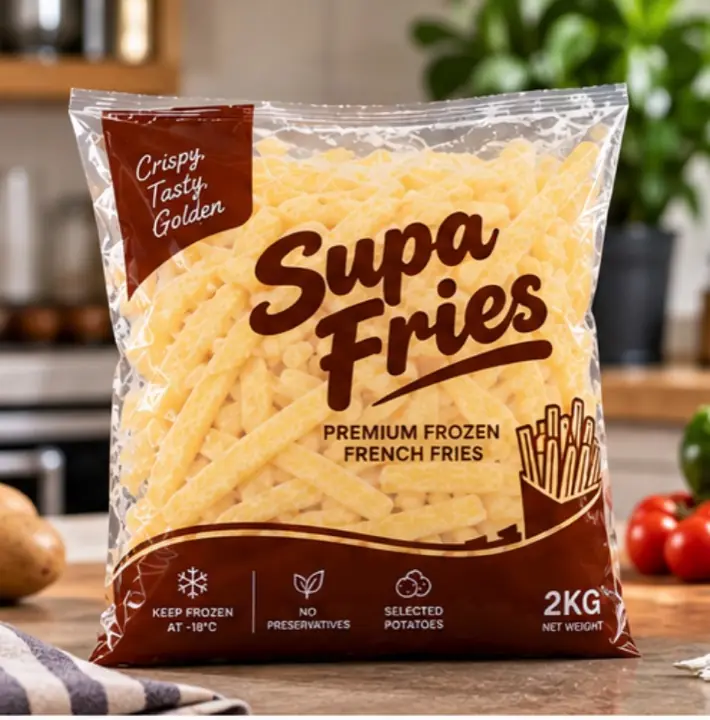
If you or your customers have allergies, read this part every time. Coated fries can contain wheat (gluten), and some are fried in oils that are not listed clearly. Supa Fries, for example, are made from Tanzanian potatoes with no preservatives; freezing keeps them fresh. Our frozen fries myths post explains why most plain frozen fries do not need preservatives.
What do the cut size and type tell you?
Good packs tell you the cut, such as straight cut, shoestring, crinkle or wedges, and often the thickness in millimetres. Thicker fries (10 to 12 mm, like Supa Fries) stay fluffy inside and hold heat longer. Thin fries (6 to 7 mm) cook faster but go cold and soft sooner. Restaurants should pick one cut and stick with it. Our types of french fry cuts post compares them all.
Why does net weight matter?
Net weight is the weight of the fries without the bag. Use it to compare prices fairly: divide the price by the kilograms to get the price per kilo. A 2 kg pack and a 2.5 kg pack at similar prices are not the same deal. For restaurants, the real number is cost per cooked portion, because cheap fries that shrink, burn or break waste more. Our post on choosing frozen fries for restaurants explains how to compare on cost per portion.
What storage instructions should you see?
Look for "Keep frozen at -18°C or below" or similar. That is the standard temperature for frozen food. Many packs also say "Do not refreeze once thawed." If the pack does not give a storage temperature, that is a warning sign about how carefully it was made. Our guide on how to store frozen fries explains what happens at home.
How do you read the date?
Frozen fries usually carry a best before date. The UK Food Standards Agency explains the difference between best before and use by: best before is about quality, while use by is about safety and appears on foods that spoil quickly. Fries kept properly frozen are usually still safe after the best before date, but they may be drier or less crisp. Check the date anyway, and choose packs with plenty of time left, especially when buying in bulk.
Some packs also show a batch or lot number. Keep a photo of it if you buy large quantities. If there is ever a problem, the maker can trace the batch.
What cooking instructions should be on the pack?
Good packs give times and temperatures for a deep fryer, an air fryer and an oven, and tell you to cook from frozen. For Supa Fries that is about 3 minutes at 175°C in a deep fryer, 12 to 15 minutes at 200°C in an air fryer, or 18 to 22 minutes at 220°C in an oven. Follow the pack first, then adjust for your own equipment. More detail is in our how to cook frozen fries guide.
Who made it, and is that clear?
The label should name the maker or importer and give an address or contact. In Tanzania, packaged food should also meet the requirements of the Tanzania Bureau of Standards. Labelling rules around the world are based on the Codex Alimentarius standards, which set out the basics every food label should carry, including the name of the food, ingredients, net quantity, dates and storage instructions. A pack with no clear maker, no address and no date is one to leave on the shelf.
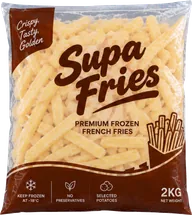
Supa Fries 2 kg packs show the cut, storage temperature, cooking times and maker details. No preservatives, just Tanzanian potatoes. Order on WhatsApp.
Order on WhatsAppWhat should you check on the pack itself?
The label tells you what the maker intended. The pack tells you how it was treated since. Before you buy:
| Check | Good sign | Warning sign |
|---|---|---|
| Feel | Hard and cold all over | Soft or bendy patches |
| Shake it | Fries move freely | One solid block |
| Inside the bag | Little or no frost | Lots of ice crystals or snow |
| Bag | Sealed, clean, undamaged | Torn, wet or stuck to other packs |
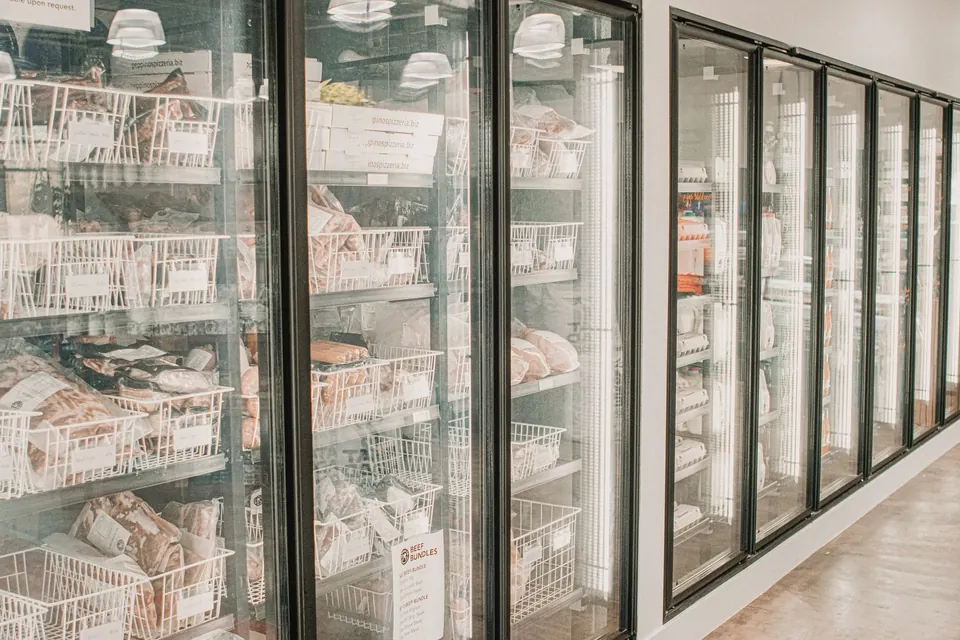
| Freezer | Cold, not overfilled | Packs above the load line, warm display |
Frozen blocks and heavy frost mean the pack thawed and refroze at some point. It may still be safe, but it will cook badly. Our post on refreezing frozen fries explains why.
What do claims on the front of the pack mean?
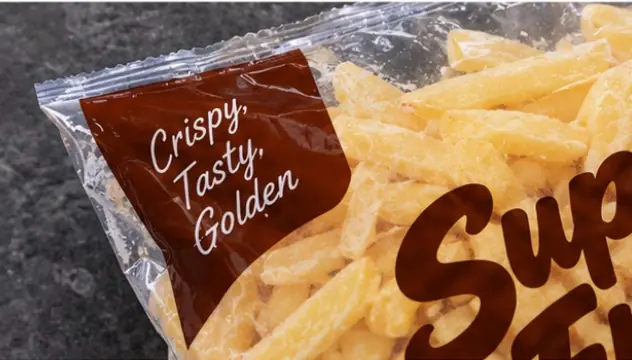
The front of the pack is advertising; the back is information. Words like "premium", "crispy" or "golden" are the maker's description and are not regulated in the same way as the ingredients or net weight. Some front-of-pack claims are more useful. "No preservatives" can be checked against the ingredients list. "Made in Tanzania" tells you the supply chain is shorter. "Skin on" or "seasoned" tells you about taste and texture. When a claim matters to you, look for it on the back too. If the back of the pack does not support the front, trust the back.
What extra should restaurants check?
When buying in bulk, also check the outer carton for dates and damage, count the packs against the invoice, and measure the temperature of a pack on delivery. Our guide on receiving frozen food deliveries gives a full checklist. Test-fry a few portions from each new brand before switching, and compare colour, crunch and how long the fries stay crisp.
Esther now reads every pack before it goes in her basket and shakes it to make sure the fries move. "It takes ten seconds," she says, "and I have not had a block of ice since."
In short
On a frozen fries pack, look for a short ingredients list (mostly potatoes), the cut and size, net weight, "keep frozen at -18°C", a best before date, cooking instructions for fryer, air fryer and oven, and the maker's name and address. Then check the pack itself: it should be hard, with fries that move freely and little frost inside. Solid blocks, soft patches and heavy ice crystals mean it thawed and refroze, so it will cook badly. Restaurants should also check cartons, counts and temperatures on delivery.
Frequently asked questions
What ingredients should frozen fries have?
Plain fries should list potatoes first, sometimes with vegetable oil, salt or a natural colour stabiliser. Coated or seasoned fries will have more ingredients.
What does the best before date mean on frozen fries?
It is about quality, not safety. Fries kept frozen at -18°C are usually safe after the date but may be drier or less crisp.
How can I tell if frozen fries have thawed and refrozen?
The pack feels like one solid block, there are lots of ice crystals or snow inside, or the fries are stuck together.
What temperature should frozen fries be stored at?
At -18°C or colder, as stated on most packs.
Do frozen fries contain preservatives?
Most plain frozen fries do not need them because freezing keeps them fresh. Supa Fries contain no preservatives. Always check the ingredients list.
How should I compare prices between packs?
Divide the price by the net weight to get the price per kilo, and for restaurants compare cost per cooked portion.
Put better chips on your menu
Found this useful? Share it.