
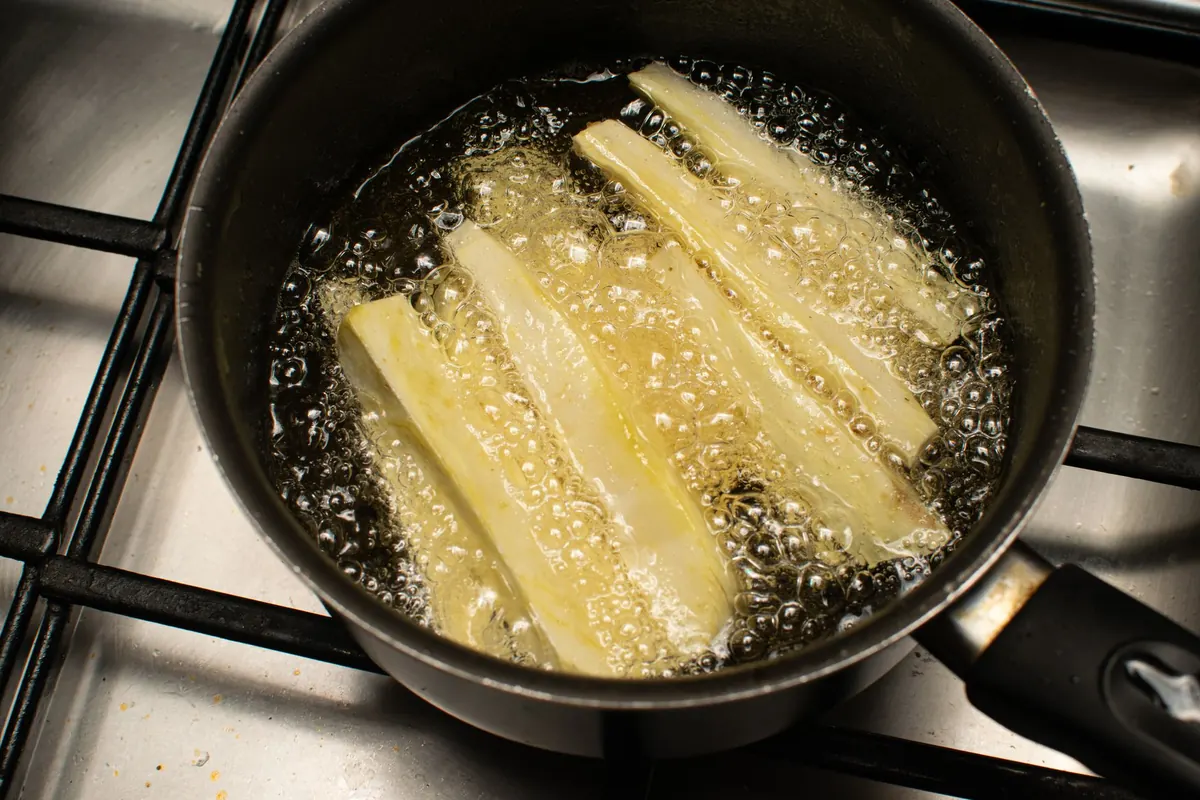
Walk along the beach in Dar es Salaam in the evening and you will smell it: mihogo frying, with chilli and lime waiting on the side. A few streets away, a chips spot is frying potatoes for chipsi mayai. Both are loved. Both are fried roots. So what really is the difference?
How do potato chips and cassava chips compare?
Values are approximate and vary with variety and cooking method.
| Potato chips | Cassava chips (mihogo) | |
|---|---|---|
| Raw energy per 100 g | About 77 kcal | About 160 kcal |
| Carbohydrates | Lower | About twice as much |
| Texture when fried | Crisp outside, fluffy inside | Crunchy outside, dense and chewy inside |
| Taste | Mild, savoury | Slightly sweet, nutty |
| Preparation | Fry from frozen | Peel, boil, then fry |
| Cooking time | About 3 min (frozen fries) | 30 to 40 min in total |
| Safety | Avoid green potatoes | Must be peeled and fully cooked |
Typical raw values from USDA FoodData Central. More background on cassava.
What are mihogo chips?
Mihogo is Swahili for cassava. Across Tanzania, vendors sell it fried or roasted, often with salt, chilli and a squeeze of lime, especially at the beach and along busy roads in the evening. You will find it at spots like Coco Beach; see the best street food in Tanzania.
Is cassava safe to eat?
Yes, when it is prepared properly. Raw cassava contains natural compounds that can release cyanide. Peeling, soaking and thorough cooking make it safe. Sweet varieties sold for cooking are lower in these compounds than bitter ones. The FAO's guide to cassava in food explains safe processing. Never eat cassava raw.
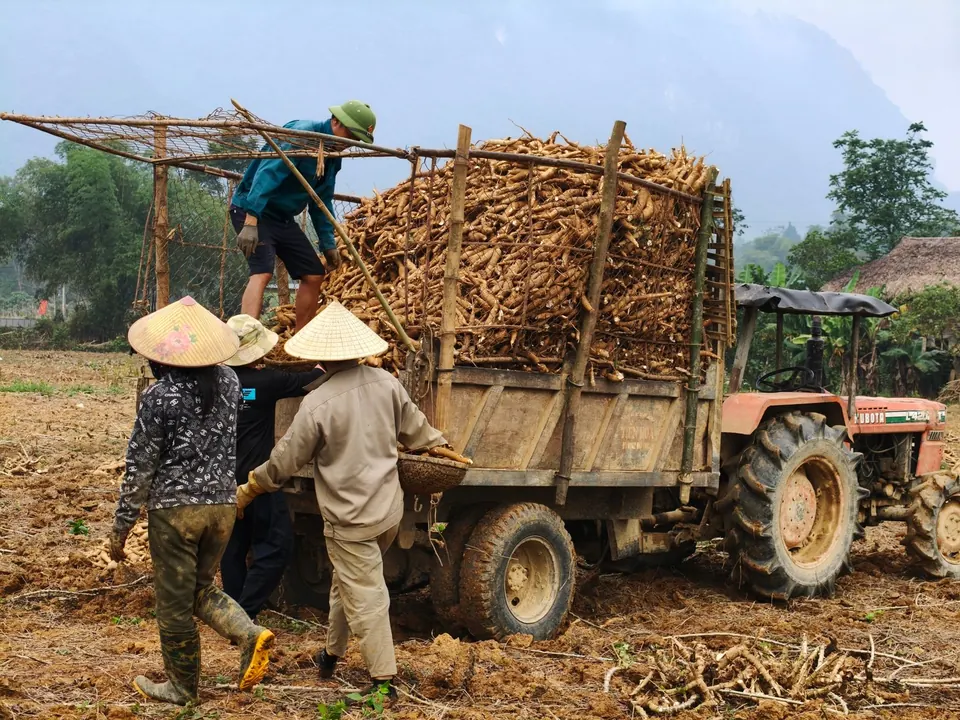
How do you make fried cassava chips?
- Peel the cassava fully, including the pinkish inner layer, and cut into chunks.
- Boil in salted water for 15 to 20 minutes until tender. Remove the hard woody core.
- Drain, cool and dry, then cut into thick chips.
- Fry at 175°C until golden and crunchy, about 5 to 8 minutes.
- Serve with salt, chilli and lime.
How do you make potato chips the quick way?
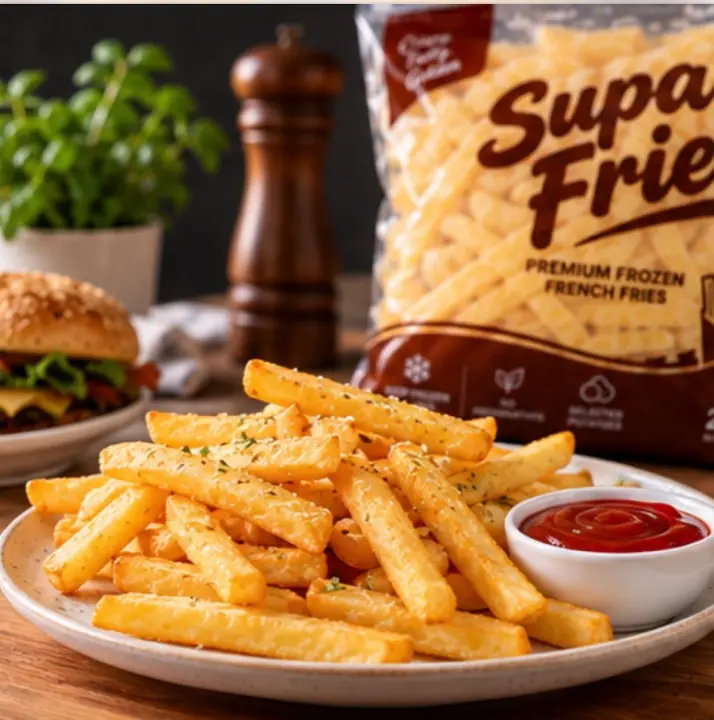
Use frozen fries: no peeling or boiling. Fry from frozen at 175°C for about 3 minutes, or air fry at 200°C for 12 to 15 minutes. Full guide: how to cook frozen fries.
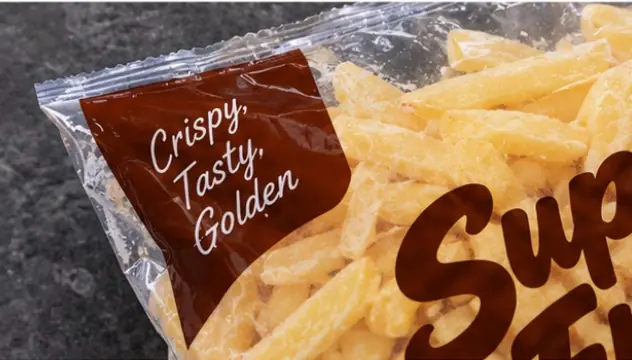
No peeling, no boiling. Straight from the freezer to golden fries in about 3 minutes.
Order on WhatsAppWhich should you choose?
- Choose mihogo for a filling, traditional snack with a sweet, nutty taste.
- Choose potato chips for chipsi mayai, chips kuku, loaded fries, kids' meals and anything that needs to be quick.
- Serve both at a party for a true Tanzanian snack table.
Compare more sides in chips vs rice vs ugali and sweet potato vs regular fries.
Where are cassava and potatoes grown in Tanzania?
They grow in very different places. Cassava (mihogo) is a hardy crop that tolerates heat, poor soils and dry spells, so it is widely grown in lowland and coastal areas and in many regions across the country. Irish potatoes need cool weather and grow mainly in the highlands, especially the Southern Highlands around Njombe, Mbeya and Iringa. This is one reason mihogo is such a common snack on the coast, while potato chips dominate in cities served by the highland potato trade. Read Irish potatoes in Tanzania.
How do their nutrients compare beyond calories?
| Nutrient (raw, approx.) | Potato | Cassava |
|---|---|---|
| Water | About 79 percent | About 60 percent |
| Carbohydrates | About 17 g per 100 g | About 38 g per 100 g |
| Protein | About 2 g per 100 g | About 1.4 g per 100 g |
| Vitamin C | Good source | Good source |
| Potassium | Good source | Good source |
The big difference is water: cassava is denser, so the same weight carries more energy. That makes mihogo very filling, but also means portions should be smaller if you are watching calories. Values from USDA FoodData Central.
Which stores better?
Fresh cassava spoils fast, often within two or three days of harvest, as the root starts to discolour and go bad. That is why it is usually cooked or processed quickly, for example into flour. Raw potatoes keep for weeks in a cool, dark place. Frozen fries keep the longest: up to 12 months at −18°C. Peeled cassava can also be frozen: boil it until just tender, cool, and freeze in bags, ready to fry later. See how to store frozen fries.
How should you season each?
- Mihogo: salt, chilli powder and a squeeze of lime, the classic roadside way. Coconut and chilli dips also work well.
- Potato chips: salt, masala, garlic and herb, peri-peri or plain with ketchup. See 8 fries seasoning ideas.
- Both: kachumbari and pilipili sauce on the side. Recipes in 10 dipping sauces.
Which makes more sense for a food business?
Potato chips are the safer choice for most food businesses: customers order them every day, they work in many dishes (chipsi mayai, chips kuku, loaded fries), and frozen fries cook in minutes with no prep. Mihogo is great as an extra, especially near the coast and at evening snack spots, but it needs peeling, boiling and careful handling, and fresh cassava does not keep. A small mihogo side alongside your chips menu can work well if your customers ask for it. See how to start a chips business in Tanzania.
How do other fried roots compare?
Sweet potatoes (viazi vitamu) and plantain (ndizi) are also fried across Tanzania. Sweet potato fries are sweeter and softer; fried ndizi is sweet and caramelised. Each has its place, but none matches the crisp, fluffy, savoury bite of a classic potato chip. Compare in sweet potato vs regular fries, and see how chips compare with Tanzania's staple sides in chips vs rice vs ugali.
How do you serve both at a party?
A Tanzanian snack table with both mihogo and potato chips is always popular. Boil the cassava in the morning, cool and cut it, then fry it just before guests arrive. Fry potato fries in small batches throughout the party so they stay hot. Serve both with lime wedges, chilli salt, kachumbari and two or three dipping sauces. Plan about 100 g of each per guest if you serve both, and see how much fries per person for more.
What about roasted mihogo and roasted potatoes?
Not all mihogo is fried. Along roadsides and at the beach, vendors often roast whole pieces of cassava over charcoal until the outside chars and the inside turns soft and smoky. Roasted cassava uses no oil at all, so it is lighter than fried mihogo, and it is usually served with salt, chilli powder and a squeeze of lime. Potatoes can be roasted the same way, in their skins over charcoal or in the oven, but in Tanzania the potato is far more often fried as chips.
If you want the flavour of street-style mihogo with less oil at home, boil peeled cassava until tender, cut it into thick chips, brush with a little oil and roast in the oven at 220°C for 25 to 30 minutes, turning once. For potato chips with less oil, oven-bake or air fry frozen fries at 200 to 220°C. Both methods give a crisp outside with much less fat than deep frying. Compare methods in air fryer vs deep fryer.
Which is better for children?
Both can be part of a child's diet when properly cooked. Cassava must always be peeled and fully cooked, and its dense texture can be hard for very young children to chew, so cut it small. Potato fries are softer inside and easier for children to eat, and most children already love them. Keep portions small, about 80 to 120 g, and serve with protein and vegetables. See how much fries per person.
In short
Cassava chips (mihogo) are denser, chewier and higher in calories and carbohydrates than potato chips, and they take longer to cook because cassava must be boiled first. Potato chips are lighter and fluffier inside, crisper outside, and cook from frozen in about 3 minutes. Both are delicious; mihogo is a classic roadside and beach snack in Tanzania, while potato chips are the base of chipsi mayai and chips kuku.
- Cassava (mihogo) chips are denser, chewier and higher in calories per gram than potato chips.
- Cassava must be peeled and fully cooked; never eat it raw.
- Potato fries are lighter, fluffier and cook from frozen in about 3 minutes.
- Mihogo is a classic coastal and roadside snack; potato chips are the base of chipsi mayai and chips kuku.
- Both taste great with salt, chilli, lime and kachumbari.
Frequently asked questions
Is cassava healthier than potato?
Not necessarily. Cassava has about twice the calories and carbohydrates of potato. Both are good energy foods; cooking method and portion size matter most.
What is mihogo in English?
Cassava, also called manioc or yuca.
Do you need to boil cassava before frying?
Yes. Boil peeled cassava until tender, remove the woody core, then fry. This makes it soft inside and safe to eat.
Which cooks faster, cassava or potato chips?
Potato chips, especially frozen fries, which cook in about 3 minutes. Cassava needs boiling first, so it takes 30 to 40 minutes in total.
Can I freeze cassava?
Yes. Peel it, boil until just tender, cool, and freeze in bags. Fry from frozen or after a short thaw.
Why does fresh cassava go bad so quickly?
The root starts to discolour and spoil within a few days of harvest, so it is usually cooked or processed soon after.
Is mihogo a good snack for a chips business?
It can be a good extra, especially near the coast, but it needs more prep than frozen potato fries and fresh cassava does not keep.
Is roasted cassava healthier than fried cassava?
Yes. Roasting over charcoal or in the oven uses little or no oil, so roasted mihogo has much less fat than fried mihogo.
Get Supa Fries delivered
Found this useful? Share it.