
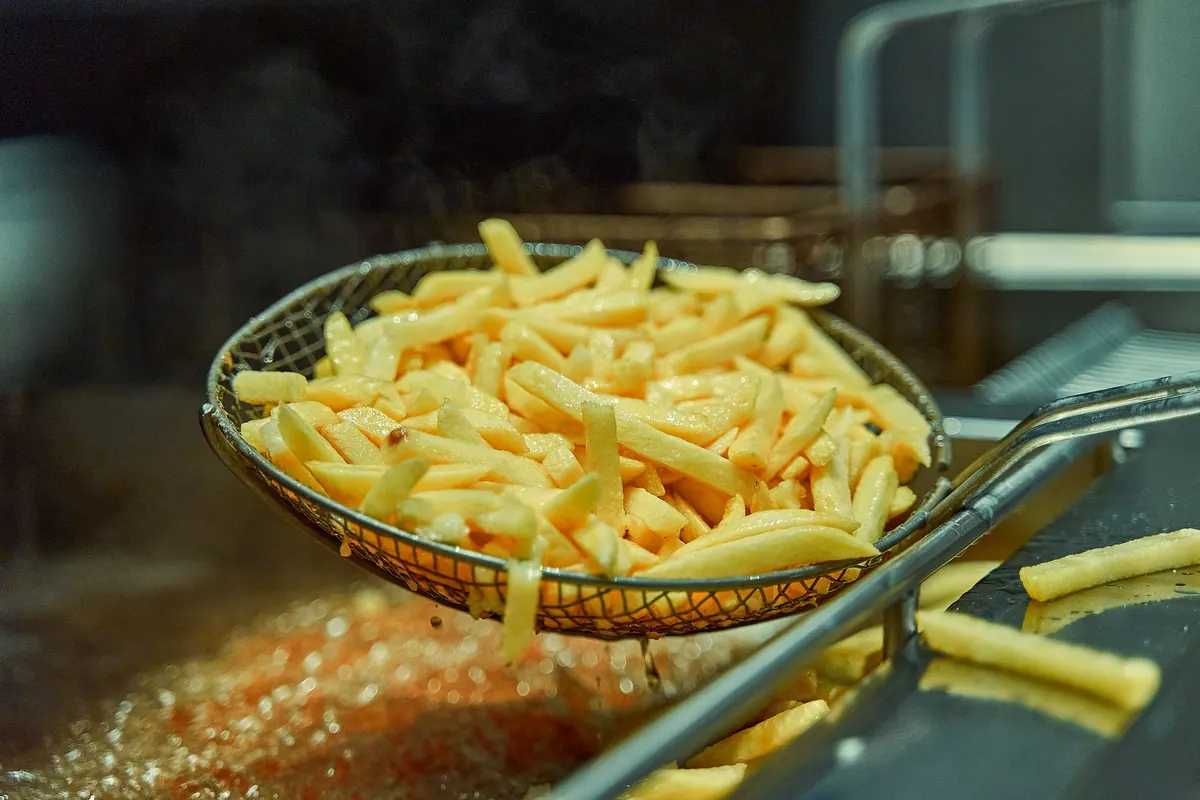
Juma runs a busy chips and chicken spot in Sinza. At 3pm his chips are perfect: golden, crisp and the same size on every plate. At 8pm on a Friday, with twenty orders on the board, they come out pale, soft and piled differently by every cook. Regulars notice. One of them told him, "Your chips are only good in the afternoon."
That is the problem this guide solves. To keep chips consistent in a busy restaurant, fix the portion by weight, fry in small batches with oil at about 175°C, keep holding time under five minutes, and write the routine down so every cook does it the same way. Below are nine practices that work for one small kitchen or for a group with several branches.
Why does chips quality drop when the restaurant is busy?
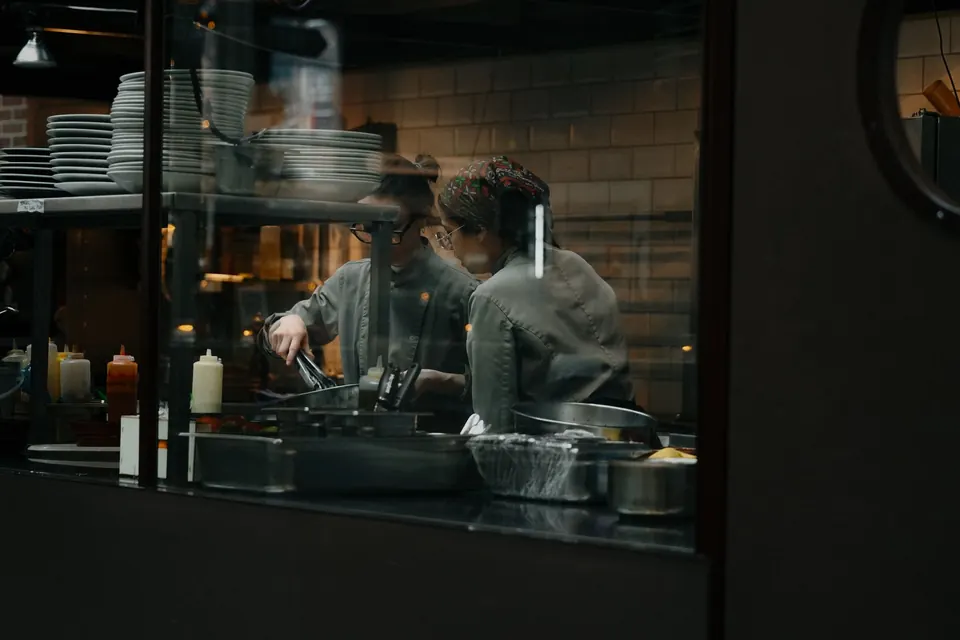
Almost always for the same few reasons. Cooks overfill the fryer basket to keep up, so the oil temperature crashes and the chips steam instead of fry. Cooked chips sit waiting while the chicken finishes. Portions grow or shrink depending on who is serving. And the oil, which was fresh at lunch, is tired by evening.
None of these are about skill. They are about having a system that still works when people are rushing. The French kitchen idea of mise en place, having everything prepared and in its place before service, is the backbone of the practices below.
What are the 9 best practices for consistent chips?
1. Set one portion size, by weight
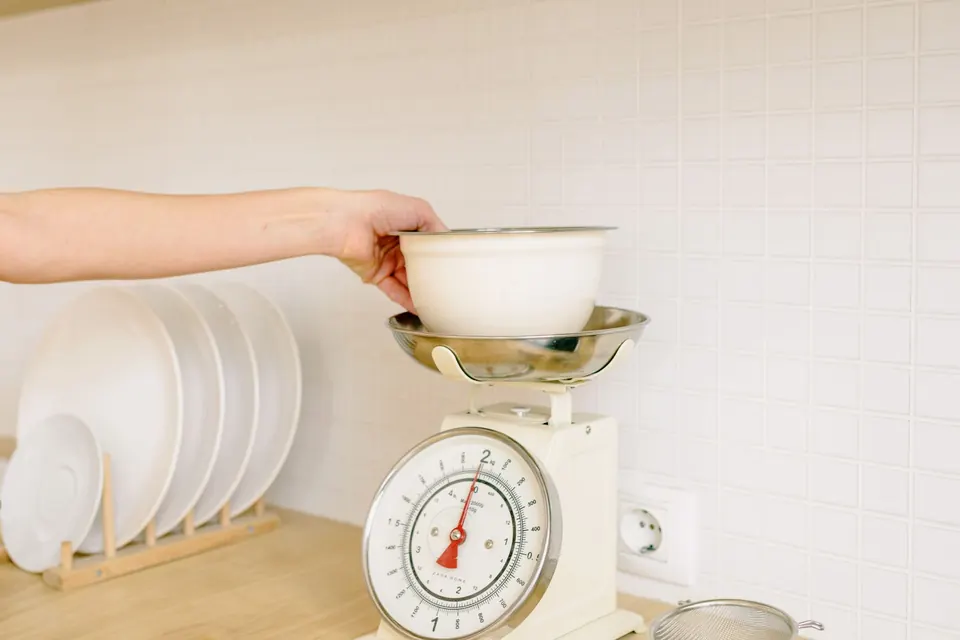
Decide what a portion is in grams and stick to it. Many Tanzanian spots serve 200 to 250 g of cooked chips for a single plate and 300 to 350 g for chipsi mayai. Weigh a few portions at the start of every shift so staff can see what the right amount looks like. Our portion size guide has numbers for different dishes.
2. Use the same scoop or container every time
Scales are good for training, but weighing every plate at 8pm is not realistic. Once you know the weight, find a scoop, cup or bowl that holds that amount and use only that. A marked container beats a cook's eye every time.
3. Fill the basket only halfway
This is the single biggest fix. An overfilled basket drops the oil temperature by 30 or 40 degrees, and chips that should take three minutes take six and come out greasy. Two half baskets cook faster and better than one full one. If you are always short of fryer space at peak hours, that is a sign you need a second fryer, not bigger batches. See how to choose a commercial deep fryer.
4. Check the oil temperature, do not guess
Oil at about 175°C gives golden, crisp chips. Below 160°C they soak up oil; above 185°C they brown before the inside cooks. A clip-on thermometer costs little and removes the guesswork. Let the oil recover between batches; a basket that goes in too soon is the second most common cause of soft chips.
5. Cook from frozen, straight from the freezer
If you use frozen fries, keep a small working stock in a freezer next to the fryer and never let packs thaw on the counter. Thawed fries clump, spit and cook soft. Frozen fries also remove the biggest variable of all, the potato itself. Fresh potatoes change from sack to sack, which is why so many kitchens switched. Our comparison of frozen fries and fresh-cut chips explains the trade-offs.
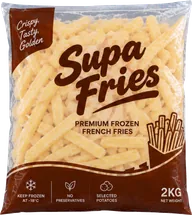
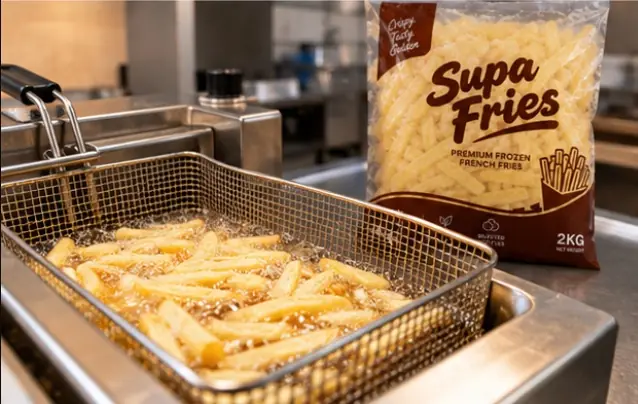
Supa Fries are cut 10 to 12 mm from selected Tanzanian potatoes and cook from frozen in about 3 minutes, so the 8pm plate looks like the 3pm plate.
Ask for wholesale prices6. Keep holding time under 5 minutes
Chips are at their best in the first few minutes. After that, steam from inside softens the crust. Time your frying to the rest of the order: drop the chips when the chicken or eggs are nearly ready, not before. If you must hold chips, keep them in a shallow open tray under gentle heat, never covered, and throw out anything older than about seven minutes.
7. Salt and season at the same moment, the same way
Salt straight after draining while the chips are still glistening, using a shaker with a fixed number of shakes per portion. Uneven salt is one of the things customers notice first. If you have a house seasoning, mix it in big batches so it tastes the same every day. Ideas are in fries seasoning ideas.
8. Change and filter oil on a schedule
Dark, foamy or smoky oil gives dark, greasy chips. Skim crumbs after every few batches, filter at the end of each day, and top up with fresh oil. Change it completely on a fixed schedule rather than when it "looks bad", because by then the chips already taste of it. Our guide on how often to change frying oil gives simple signs to watch.
9. Write it down and train everyone the same way
Put the routine on one laminated card next to the fryer: portion weight, basket fill line, oil temperature, cooking time, holding limit, salt. Train every new cook with it on their first day, and check it at the start of each shift. When the routine lives on the wall instead of in one person's head, the chips stop depending on who is working.
What does a simple chips standard look like?
Here is an example card you can copy and adjust for your kitchen.
| Step | Standard | Why it matters |
|---|---|---|
| Portion | 220 g cooked (one marked scoop) | Same value for every customer, controlled cost |
| Basket | Half full, about 500 g frozen | Oil stays hot, chips stay crisp |
| Oil | 175°C, checked with a thermometer | Golden colour, less oil absorbed |
| Time | About 3 minutes, shake once | Even cooking |
| Holding | Serve within 5 minutes, never covered | Crust stays crisp |
| Salt | Straight after draining, 3 shakes | Even taste |
| Oil care | Skim each hour, filter nightly | Clean taste, longer oil life |
How do you keep chips the same across several branches?
With more than one branch, the problem grows. Each branch buys from a different market, each manager has their own habits, and the chips start to taste like the branch rather than the brand. Three things help most:
- One supplier and one product for every branch, so the starting point is identical. Our guide to frozen fries suppliers in Tanzania covers what to look for.
- The same equipment settings, including fryer size, basket size, thermometer and scoop.
- Regular checks, such as a surprise order from each branch every week, photographed and compared side by side.
Share the photos in the managers' WhatsApp group. Nothing fixes a drifting branch faster than seeing its plate next to the others.
Why does consistency matter so much for customers?
People come back to a restaurant because they know what they will get. A customer who had great chips on Monday and soggy chips on Friday does not average the two; they remember the bad one and tell their friends. Consistency also protects your margins. When portions drift upwards by just 30 g a plate, a busy spot can give away several kilograms of chips a week without noticing. Our post on chips cost per plate shows how quickly that adds up.
Food safety is part of consistency too. A written routine that covers oil, holding times and hand washing makes inspections easier. The UK Food Standards Agency's Safer Food, Better Business pack is a free, practical model of how to write simple kitchen routines, and it adapts easily to a Tanzanian kitchen. Our food safety rules for chips vendors covers the local side.
Where should you start this week?
Do not try all nine at once. Start with the three that make the biggest difference: weigh your portions, fill baskets halfway, and buy a thermometer. Watch one Friday night service with those three in place and you will see the change. Then add the written card and the oil schedule.
Juma did exactly that. He bought a scale and a thermometer, painted a fill line inside each basket, and taped a card above the fryer. Two weeks later the same regular said something different: "Your chips are the same now, morning or night."
In short
Chips stay consistent when the routine does not depend on who is cooking. Set a portion by weight and serve it with a marked scoop, fill fryer baskets only halfway, fry at about 175°C checked with a thermometer, cook frozen fries straight from the freezer, serve within five minutes, and salt the same way every time. Filter and change oil on a schedule, write the standard on a card by the fryer, and for several branches use one supplier, the same equipment and weekly photo checks.
Frequently asked questions
Why are my restaurant chips soggy at busy times?
Usually because baskets are overfilled, which drops the oil temperature, or because cooked chips sit too long before serving. Fry smaller batches at about 175°C and serve within five minutes.
How many grams of chips should a restaurant serve?
Many Tanzanian spots serve 200 to 250 g of cooked chips for a single plate and 300 to 350 g for chipsi mayai. Pick one size and serve it with the same scoop every time.
How long can cooked chips be held before serving?
Aim for under five minutes. After about seven minutes, steam from inside softens the crust, so it is better to fry smaller batches more often.
Do frozen fries help with consistency?
Yes. Frozen fries come in the same cut and quality every time, so the potato stops being a variable. You still need the right oil temperature and batch size.
How do chains keep chips the same in every branch?
By using one supplier, the same fryers, baskets and scoops, a written standard, and regular side-by-side photo checks of plates from each branch.
Put better chips on your menu
Found this useful? Share it.